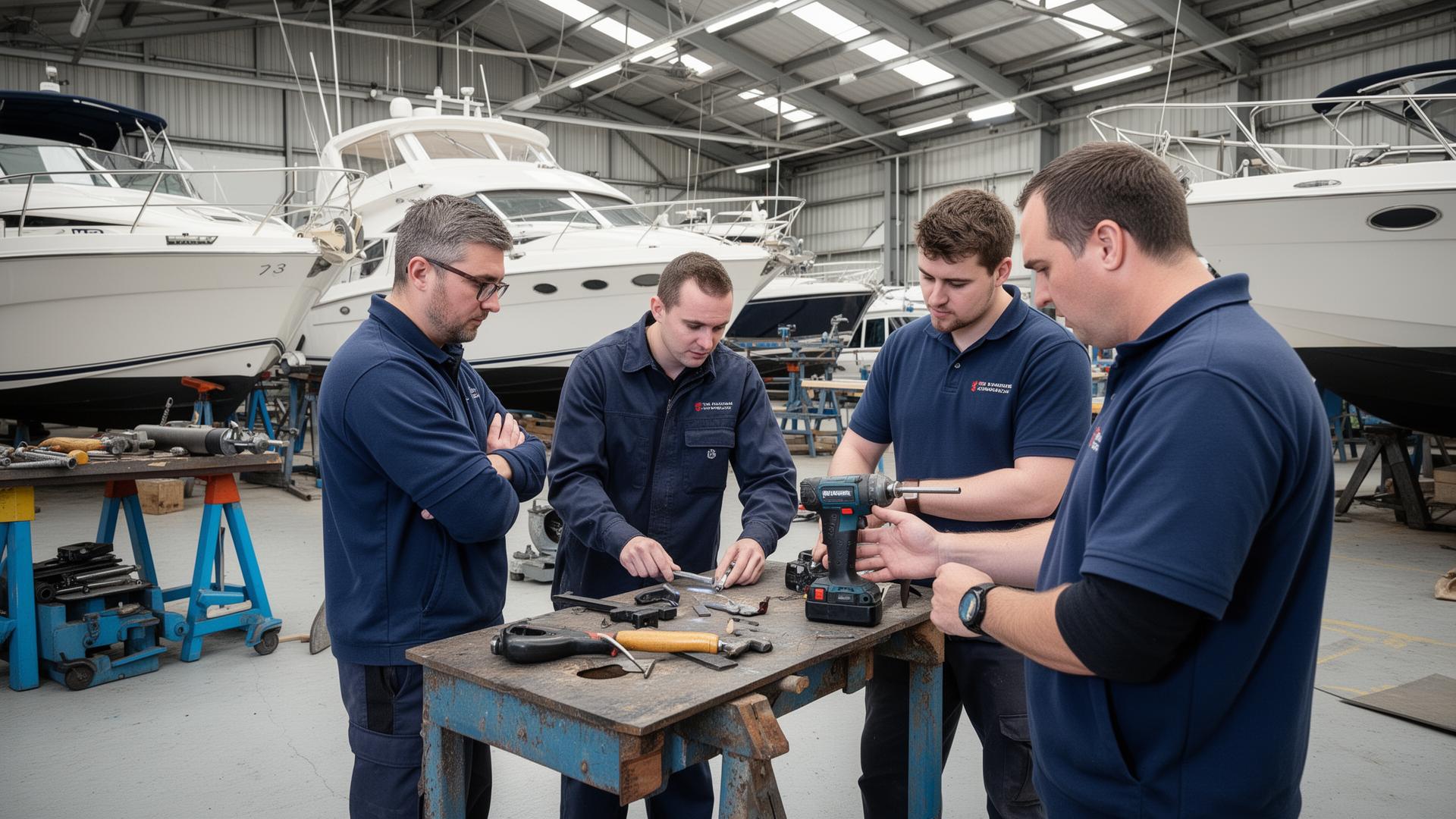
Boatyard Staff Training: UK Guide
Building a competent yard team: the tickets that matter, in-house training that works, and how to hold on to skilled people.
12 min read By PayCamp Yards TeamFinding and keeping skilled staff is one of the biggest challenges facing UK boatyards. This guide covers everything from qualifications and training programmes to retention strategies that actually work.
The UK marine industry faces a genuine skills shortage. An ageing workforce, competition from other sectors, and limited training infrastructure mean that finding qualified marine engineers, technicians, and even general yard staff is increasingly difficult.
Smart boatyard operators are responding by investing in training—both developing existing staff and creating pathways for new entrants to the industry.
NVQ Level 3 Marine Engineering, manufacturer certifications (Volvo Penta, Yanmar, Mercury), plus ongoing technical training.
Composites NVQ or equivalent, manufacturer training for specific materials and techniques.
Part P qualified (for shore connections), ABYC certification desirable, manufacturer training for electronics systems.
CPCS certification (or equivalent), regular refresher training, site-specific authorisation.
Effective training doesn't happen by accident. It requires planning, budget, and commitment from management.
Start by mapping what skills you have versus what you need. Identify gaps, succession risks (key staff approaching retirement), and areas where training would improve efficiency or quality.
Schedule training during quieter periods—typically January-February for most UK boatyards. This ensures courses don't conflict with peak demand and staff can focus on learning.
Apprenticeships offer a structured route into the industry, combining work-based learning with formal qualifications. Government funding covers most training costs, making this an affordable way to develop new talent.
The Marine Industries apprenticeship framework covers boat building, marine engineering, and related trades. Typical programmes run 3-4 years and result in NVQ Level 3 qualifications.
Training staff only makes sense if you can keep them. In a competitive market, retention requires more than just competitive pay (though that matters too).
Modern boatyards increasingly rely on software for job management, scheduling, and customer communication. Training staff on these systems pays dividends in efficiency, data quality, and reduced admin burden.
The best systems are intuitive enough that skilled tradespeople can use them without extensive training, but proper onboarding still matters. Include software training in induction programmes and refresh periodically.
Founder & Lead Developer
Fourteen years living aboard, thirty years in IT, and five years supporting dealer management systems in the motor trade — back to configuring FoxPro-based dealer systems in 1998. Hamish has spent a long time on the customer side of a yard office, which is why PayCamp Yards is built for both sides of the counter.
Learn more about our team →PayCamp Yards is designed for busy technicians, not computer experts.