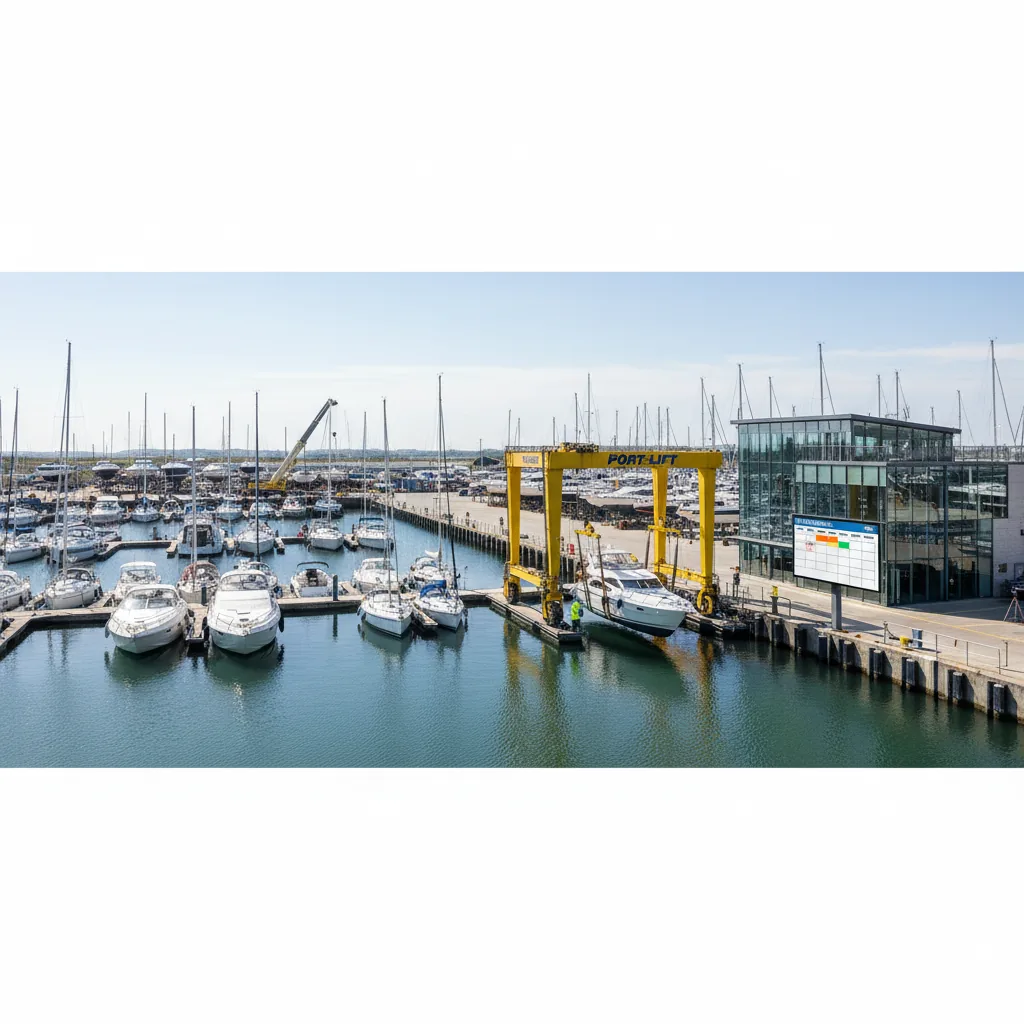
Cranage and Lift Booking for UK Boat Yards
Simplify your boat yard operations and eliminate lifting backlogs with a professional cranage booking system designed for the UK marine industry.
9 min read By PayCamp Yards TeamIn the UK marine industry, the 'shoulder seasons' of spring launch and autumn haul-out represent the highest stakes for any boat yard operator. Managing the logistics of moving multi-tonne vessels while juggling tides, weather windows, and staff availability is a complex puzzle that traditional paper diaries often fail to solve effectively. As yards grow, the reliance on manual scheduling becomes a significant bottleneck, leading to double-booked cranes, frustrated owners, and missed revenue opportunities.
Transitioning to a dedicated cranage booking system is no longer a luxury for modern UK marinas; it is a fundamental operational requirement. This guide explores how digitising your lifting schedule can transform your yard's efficiency, improve health and safety compliance, and significantly enhance your bottom line by integrating cleanly with your wider boat yard management workflows.
For decades, the standard for UK boat yards has been the A4 desk diary or a cluttered whiteboard in the yard office. While these manual methods feel familiar, they lack the agility required for modern operations. A digital cranage booking system provides a single source of truth that is accessible to the office team, the yard foremen, and the crane operators simultaneously. This connectivity eliminates the risk of miscommunication that often occurs when a booking is scribbled down over the phone but not relayed to the team on the pontoons.
Furthermore, paper systems offer zero data visibility. With a digital system, you can instantly analyse your peak lifting periods, identify which days of the week are consistently under-utilised, and view historical data to plan staffing levels for the next season. By optimising operations with berth management software, you can ensure that once a boat is lifted, its storage location is immediately logged, preventing the 'lost boat' syndrome in high-density winter storage areas.
Buffer for the Unexpected
In Britain, the window for haul-outs is often compressed by unpredictable weather and tidal constraints. A dependable cranage booking system allows operators to set 'buffer zones' between lifts, account for the time taken to pressure wash a hull, and factor in the transit time to the storage cradle. Instead of a generic hourly slot, you can create specific 'job types' with varying durations—for example, a quick 'lift and hold' for a survey versus a full 'mast-out and storage' haul-out.
Automated notifications are another real gain. Manual calling of customers to confirm their slot is time-consuming. A digital system can send automated SMS or email reminders 48 hours before a lift, ensuring the owner has prepared the vessel, checked their warps, and settled any outstanding balances. This proactive communication drastically reduces 'no-shows' which can otherwise throw an entire day's schedule into chaos.
Mandatory Data Fields
One of the most significant leaks in boat yard revenue occurs when lifting services are performed but not accurately recorded or billed. By utilising a cranage booking system that integrates with your boat yard billing system, every lift is automatically queued for invoicing. The moment the crane operator marks a job as complete, the system can generate a line item based on the boat’s LOA (Length Over All) or weight.
This integration ensures that ancillary charges—such as cradle hire, pressure washing, or mast storage—are never forgotten. For UK operators VAT compliance and clear audit trails are essential; a digital link between the yard floor and the accounts office ensures that your financial reporting is as accurate as your crane movements.
The Lifting Operations and Lifting Equipment Regulations (LOLER) 1998 set strict standards for UK boat yards. A digital cranage booking system serves as a vital component of your health and safety management. You can attach risk assessments, method statements, and vessel-specific lifting diagrams directly to the booking. This ensures that the crane team has all the information they need to perform the lift safely, such as the location of hull transducers or specific sling points for certain yacht designs.
By incorporating mobile job cards for marinas, your staff can complete pre-lifting checks on a tablet or smartphone. If a piece of equipment shows signs of wear, it can be flagged in the system immediately, preventing an incident before it happens. This digital paper trail is invaluable for insurance purposes and demonstrating a 'safety-first' culture during HSE inspections.
Today's boat owners expect a level of digital convenience in line with other service industries. A cranage booking system can offer a client-facing portal where owners can request their preferred launch or haul-out dates. While the yard maintains final control over the schedule, giving customers the ability to see available windows improves satisfaction and reduces the volume of administrative phone calls during busy periods.
Moreover, a digital system allows you to send 'job complete' photos to the owner once their boat is tucked away in its winter cradle. This extra touch provides peace of mind and reinforces the professional image of your facility, distinguishing your yard from competitors who still rely on legacy processes.
Founder & Lead Developer
Fourteen years living aboard, thirty years in IT, and five years supporting dealer management systems in the motor trade — back to configuring FoxPro-based dealer systems in 1998. Hamish has spent a long time on the customer side of a yard office, which is why PayCamp Yards is built for both sides of the counter.
Learn more about our team →PayCamp Yards: purpose-built software for UK boat yards.