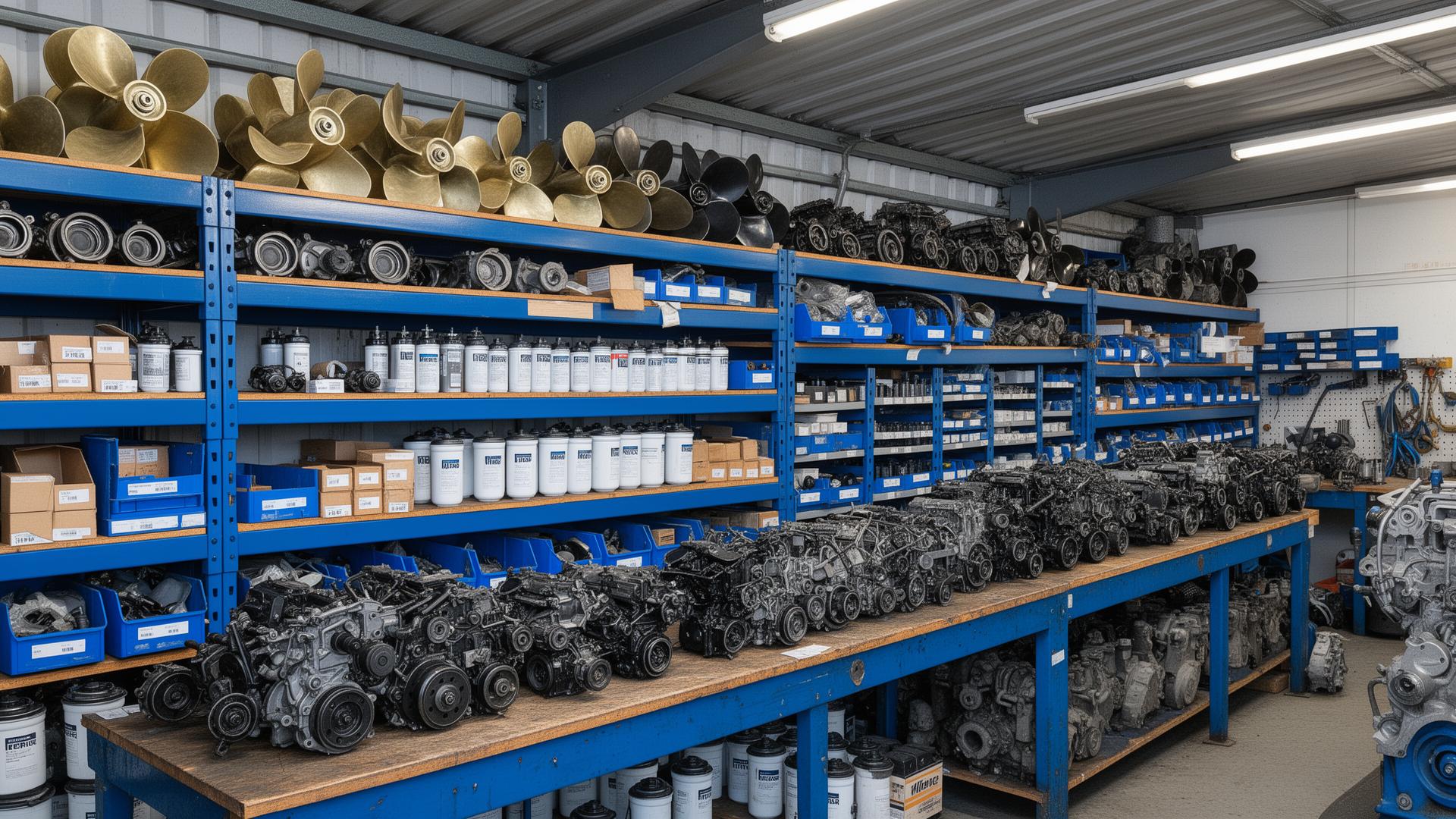
Managing Boatyard Inventory: Best Practices
Keeping antifoul, anodes and consumables in stock without tying up cash. Reorder points, stocktakes and job-linked parts.
8 min read By PayCamp Yards TeamMarine parts and consumables represent significant capital tied up in your business. Effective inventory management ensures the right parts are available when needed, without excessive stock eating into cash flow.
Boat yard inventory management is uniquely challenging. Unlike retail where demand is predictable, marine work is variable and often urgent. When a customer's engine fails, they need it fixed now—waiting a week for parts isn't acceptable.
At the same time, marine parts can be expensive and slow-moving. Stocking every possible part would tie up enormous capital. The challenge is finding the right balance.
Think about your inventory in categories with different management approaches:
Items you use constantly: engine oils, antifouling, zincs, filters, paint, sealants. These should be stocked with reorder points that ensure you never run out. The cost of stockouts (delayed jobs, emergency ordering) far exceeds the cost of carrying slightly more stock.
Parts for common repairs: impellers, belts, hoses, electrical components. Stock popular sizes and types. Monitor usage patterns—if you're ordering the same part frequently for customers, consider stocking it.
Parts ordered for specific jobs: engine components, electronics, boat-specific items. These should be ordered as needed and allocated to jobs immediately. Don't hold general stock of expensive specialist parts.
The most important aspect of boat yard inventory is integration with work orders. When a technician uses parts on a job, that should automatically:
Without this integration, you're maintaining two separate systems that inevitably drift out of sync. Inventory counts won't match reality, and invoices may miss parts that were used.
Good inventory management extends to supplier relationships:
Track every part, link suppliers, and build a full service history for every vessel.
Track every job from enquiry to invoice with digital job cards.
Your technicians can update jobs, log time, and capture photos from anywhere.
Even with careful tracking, physical stock drifts from system records. Parts get used without being logged, items are miscounted, or stock is moved between locations. Regular stocktakes catch these discrepancies.
Consider cycle counting—counting a portion of stock each week rather than doing one massive annual count. This spreads the workload and catches issues faster.
Your inventory system should support your pricing strategy:
Modern inventory management benefits from technology:
If you're new to inventory management, don't try to track everything at once. Start with your highest-value and fastest-moving items. Get those processes working smoothly before expanding to comprehensive tracking.
The goal isn't perfect inventory management—it's better visibility and control that reduces stockouts, prevents over-ordering, and ensures accurate job costing.
Founder & Lead Developer
Fourteen years living aboard, thirty years in IT, and five years supporting dealer management systems in the motor trade — back to configuring FoxPro-based dealer systems in 1998. Hamish has spent a long time on the customer side of a yard office, which is why PayCamp Yards is built for both sides of the counter.
Learn more about our team →See how PayCamp Yards integrates inventory with work orders and invoicing.