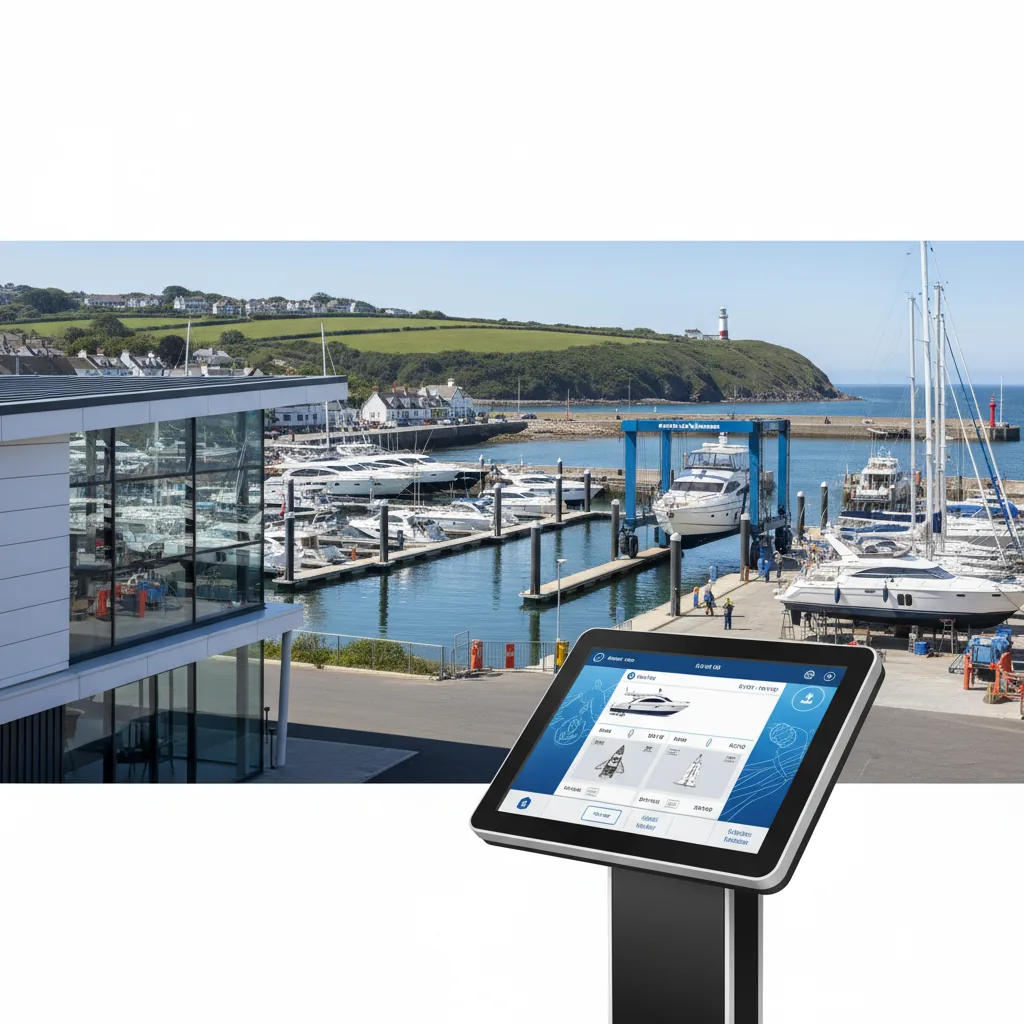
Choosing the Best Marine EPOS System for UK Boat Yards
Discover how a dedicated marine EPOS system can simplify chandlery sales, service billing, and inventory management for UK marinas and boat yards.
9 min read By PayCamp Yards TeamIn the competitive landscape of the UK maritime industry, efficiency is no longer a luxury—it is a necessity. For marina operators and boat yard managers, the daily juggle of chandlery transactions, fuel quay sales, and workshop service billing can lead to fragmented data and lost revenue if managed through generic retail software. This is where a specialised marine EPOS system becomes a transformative asset.
Unlike standard point-of-sale setups found on the high street, a marine-specific solution is engineered to handle the nuances of the nautical world. From managing 'on-account' charging for berth holders to integrating cleanly with haul-out schedules, the right system ensures that every penny is accounted for while enhancing the customer experience for vessel owners.
Many UK boat yards begin their journey using standard retail software, only to find it wanting when faced with maritime complexities. In a marina environment, a sale is rarely just a simple transaction. You might be selling a Shackleton jumper in the chandlery, but you are also dispensing red diesel at the fuel dock and charging a local fisherman for a lift-and-scrub.
A standard system struggles to link these diverse revenue streams to a single customer profile. A dedicated marine EPOS system allowed you to view a boat owner’s entire history in one place. It understands that a customer might want to add a bag of anti-fouling paint to their monthly mooring bill rather than paying immediately. Without this specific functionality, your accounts department faces a manual reconciliation nightmare at the end of every month, increasing the risk of human error and overlooked billable items.
Inventory Accuracy
When evaluating a marine EPOS system, UK operators should look for features that specifically address boat yard workflows. First and foremost is dependable inventory management. Marine stock—ranging from tiny stainless steel fittings to high-value outboard engines—requires precise tracking. Your system should offer automated reordering alerts to ensure you never run out of critical seasonal stock like anodes or impellers.
Integration is the second pillar of a successful system. Your EPOS shouldn't exist in a vacuum; it must communicate with your wider management suite. For instance, according to our guide on Marina Management Best Practices: A Guide for UK Operators (/blog/marina-management-best-practices-uk), centralising data is crucial for operational transparency. A system that syncs your chandlery sales with your boat yard billing ensures that when a shipwright pulls parts for a repair, those parts are immediately logged against the correct work order without manual entry.
Seasonal Planning
For many UK marinas, the fuel quay is a high-traffic zone that demands speed and accuracy. Modern marine EPOS systems allow for mobile hardware, enabling staff to process payments right on the pontoon. This reduces the 'walk-away' time where customers might otherwise have to leave their vessel to visit the marina office.
Furthermore, the complexity of VAT on fuel in the UK—balancing propulsion versus heating use—can be a compliance headache. A marine-optimised system can be configured to handle these declarations efficiently. In the chandlery, the EPOS should support loyalty schemes and 'member pricing' for berth holders. By offering a direct experience where a customer can tap their card or charge to their account, you're not just selling products; you're providing a premium service that justifies your berthing rates.
Efficiency in the boat yard is driven by how well your systems talk to each other. When a craft arrives for winter storage, the EPOS system should ideally be the front end of a larger ecosystem. If you are already Optimising Operations with Berth Management Software (/blog/optimising-marina-operations-berth-management-software), your EPOS should pull data from that system to verify boat dimensions or owner status before a transaction is completed.
This interconnectedness is vital when it comes to Choosing the Best Boat Yard Billing System for UK Marinas (/blog/choosing-the-right-boat-yard-billing-system). An integrated EPOS ensures that if a customer buys a new VHF radio and asks for it to be installed, the hardware cost from the shop and the labour hours from the workshop are combined into a single, professional invoice. This professional approach reduces disputes and speeds up the payment cycle, significantly improving your yard's cash flow.
Operating a marine business in the UK involves navigating specific tax and environmental regulations. Your marine EPOS system serves as your first line of defence for financial compliance. Making Tax Digital (MTD) is a requirement for most UK boat yards, so your EPOS must integrate with accounting packages like Xero or Sage.
Beyond taxes, reporting features allow you to analyse your most profitable lines. Are you making more margin on chandlery dry goods or on technical parts? Which month sees the highest volume of 'on-account' transactions? A marine-specific system provides these answers through bespoke reporting dashboards. It allows you to move away from guesswork and towards data-driven decisions, such as adjusting your stock levels based on historical seasonal trends or identifying which quay staff are most effective at upselling maintenance services.
Founder & Lead Developer
Fourteen years living aboard, thirty years in IT, and five years supporting dealer management systems in the motor trade — back to configuring FoxPro-based dealer systems in 1998. Hamish has spent a long time on the customer side of a yard office, which is why PayCamp Yards is built for both sides of the counter.
Learn more about our team →PayCamp Yards: purpose-built software for UK boat yards.