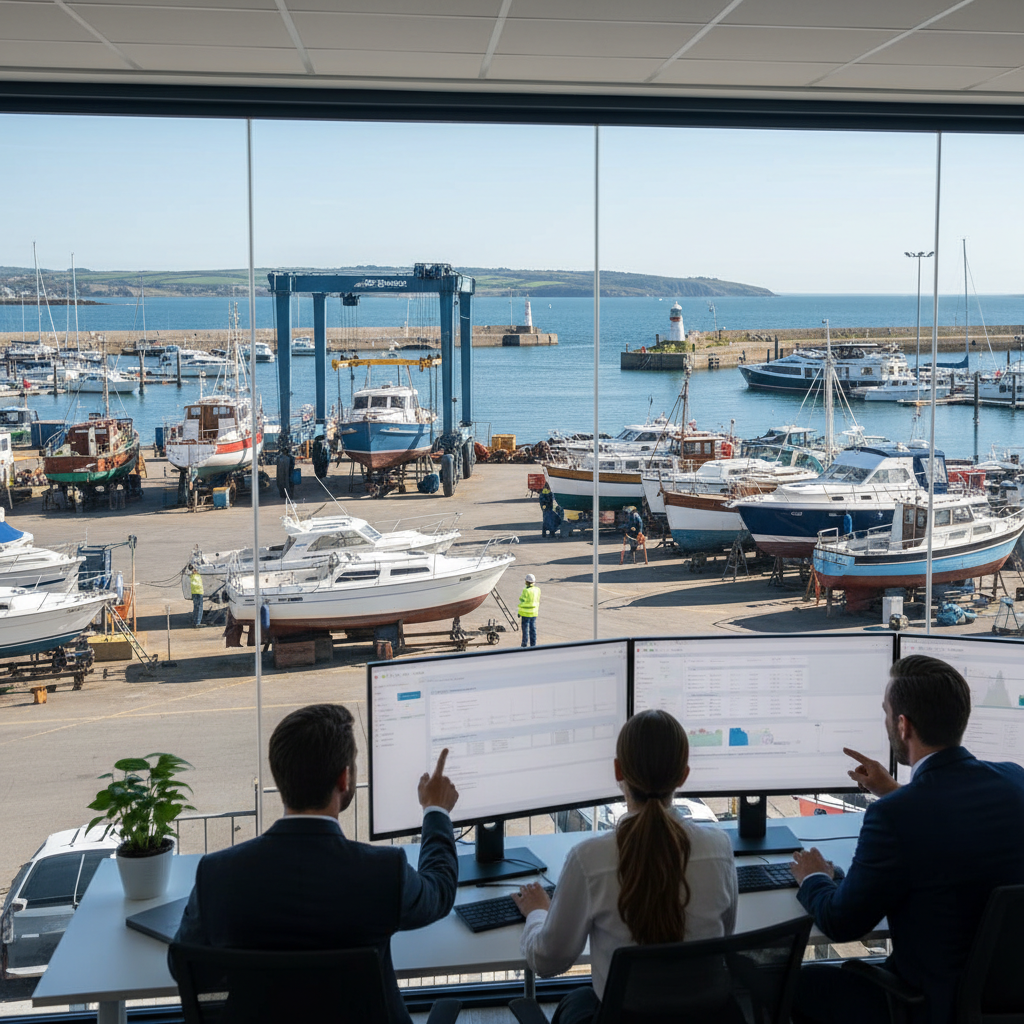
In the complex world of UK marine operations, managing a boatyard is as much about administrative precision as it is about maritime expertise. From the rugged coastlines of Cornwall to the busy hubs along the Solent, yard managers face a unique challenge: balancing technical service delivery with a financial workflow that often involves fragmented tasks, varying VAT rates, and high-value transactions.
A robust boatyard invoicing system is no longer a luxury for the modern yard; it is the backbone of operational sustainability. Whether you are lifting a 50-foot yacht for anti-fouling or managing long-term hardstanding, the ability to track every nut, bolt, and man-hour—and convert that data into an accurate invoice—is what separates a thriving business from one drowning in paperwork.
The Evolution of Invoicing in the UK Marine Sector
For decades, many UK boatyards relied on carbon-copy pads, spreadsheets, or generic accounting software that failed to understand the nuances of the marine industry. However, the unique variables of boatyard work—such as fluctuating berthing rates, specialist contractor fees, and the physical tracking of parts across a large site—demand something more specific.
Today, a modern boatyard invoicing system integrates directly with your operations. It moves away from static billing to a dynamic model where work orders, inventory usage, and berth occupancy flow directly into the final bill. This integration is vital for adhering to [Marina Management Best Practices: A Guide for UK Operators](/blog/marina-management-best-practices-uk), ensuring that your financial data reflects the real-time reality of your yard.
Capture the Small Stuff
Ensure your staff log even the smallest consumables, like rags or specialised fasteners. These 'hidden' costs can erode your margin by up to 15% if not properly captured in your invoicing system.
Why Automation is Essential for UK Boatyard Cash Flow
Cash flow is the lifeblood of any UK business, particularly those with high overheads like boatyards. Manual invoicing often leads to 'revenue leakage'—the small, unrecorded expenses like an extra litre of resin or an hour of crane time that never makes it onto the final bill. Over a season, this can cost a yard thousands of pounds.
An automated boatyard invoicing system mitigates this by allowing technicians to log hours and materials directly from the pontoons or the workshop via mobile devices. When the job is flagged as complete, the system generates a draft invoice based on pre-set price lists. This speed of billing ensures that invoices reach customers while the value of the work is still fresh in their minds, significantly reducing payment lead times and disputes.
The Professional Edge
An invoice is often the last interaction a customer has with your business for that season. A clear, branded, and itemised digital invoice via a dedicated boatyard system looks far more professional than a handwritten note, increasing the likelihood of repeat business.
Transform Your Boat Yard
Purpose-built for UK boat yards and marinas.
VAT Compliance and Marine-Specific Accounting
Navigating HMRC regulations is a significant part of running a UK marine business. Between standard rates, zero-rated services for certain commercial vessels, and the nuances of the Tour Operators Margin Scheme (TOMS) where applicable, the tax side of boatyard management can be a minefield.
By [choosing the best boat yard billing system for UK marinas](/blog/choosing-the-right-boat-yard-billing-system), you gain access to software that handles these complexities automatically. A dedicated marine system can be configured to apply the correct VAT treatment based on the vessel type or the nature of the work. Furthermore, with the UK Government's 'Making Tax Digital' (MTD) initiative, having a system that syncs directly with accounting packages like Xero or QuickBooks is no longer optional—it is a legal necessity for most operators.
Modern tools, simple to use
PayCamp Yards: purpose-built for UK boat yards.
Integrating Invoicing with Berth Management
A boatyard does not exist in a vacuum; it is often part of a wider marina ecosystem. The most efficient yards are those that use a boatyard invoicing system which talks to their berthing software. When a boat is moved from its summer berth into the yard for winter storage, the system should automatically update the billing profile from a wet-berth rate to a dry-stack or hardstanding rate.
[Optimising operations with berth management software](/blog/optimising-marina-operations-berth-management-software) allows for a unified customer view. Instead of the owner receiving three different bills for berthing, electricity, and repairs, they receive one clear, professional document. This professional presentation builds trust and reinforces your yard's reputation for quality and organisation.
Key Features to Look for in a Boatyard Invoicing System
When evaluating potential software, there are several UK-specific features you should prioritise. Firstly, look for mobile accessibility. Your yard team shouldn't have to walk back to a central office to log parts. Secondly, ensure the system supports 'split billing'—common in the UK when multiple owners or insurance companies are sharing the cost of a repair.
Thirdly, look for detailed reporting tools. You need to be able to see which types of jobs are most profitable and which are costing you money. A system that offers real-time dashboards on labour recovery rates and inventory turnover will provide the insights needed to make informed strategic decisions. Finally, robust security and UK-based data storage often provide peace of mind regarding GDPR compliance and data sovereignty.
Frequently Asked Questions
Written by
Hamish Lowry-Martin
Founder & Lead Developer
With 30 years in IT and 20 years developing business systems, Hamish spent the last decade working closely with marinas and boat yards—watching first-hand how they struggle with outdated tools. That hands-on observation led to PayCamp Yards.