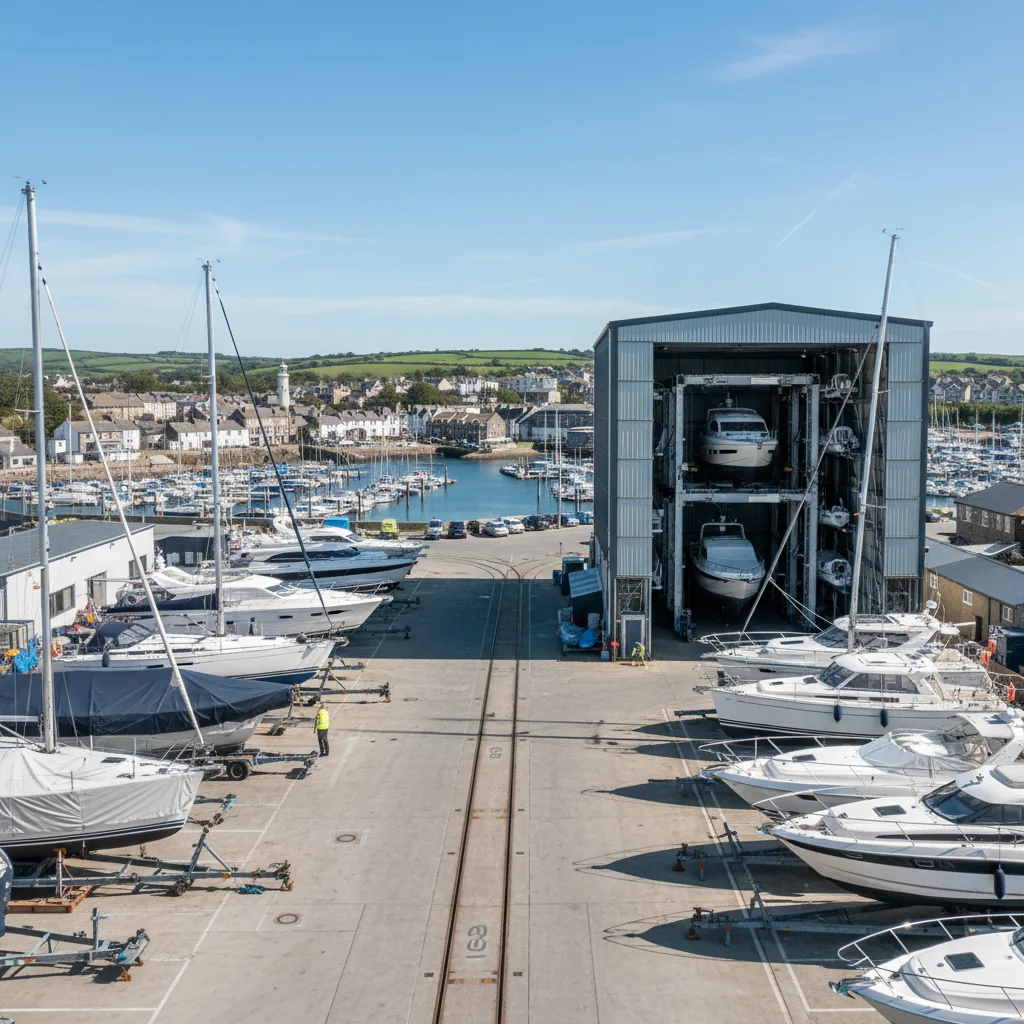
Vessel Storage Tracking: A Guide for UK Boat Yards
Master vessel storage tracking to boost revenue and space efficiency. Expert advice for UK marina operators on managing winter storage and dry stacks.
9 min read By PayCamp Yards TeamIn the competitive landscape of the UK marine industry, space is often a boat yard's most valuable—yet most finite—asset. Whether you are managing a busy South Coast marina or a niche repair yard in East Anglia, the transition from the high season to winter lay-up presents a significant logistical challenge. Effective vessel storage tracking is no longer just about knowing where a boat is parked; it is about optimising every square metre of your hardstanding to ensure maximum profitability and operational safety.
Manual spreadsheets and whiteboard drawings are increasingly insufficient for modern standards. As owners demand higher service levels and quicker turnarounds, boat yard operators must adopt dependable tracking systems that integrate cleanly with their wider business workflows. This article explores how sophisticated vessel storage tracking can transform your operations, mitigate risk, and enhance the customer experience.
For UK boat yard managers, 'vessel storage tracking' represents the heartbeat of the winter season. It involves the systematic oversight of every craft on the premises, from the moment it is lifted via travel hoist to the day it returns to the water. Accurate tracking prevents 'land-locking'—a common and costly nightmare where a vessel scheduled for an early launch is blocked by others scheduled for later in the spring.
Beyond logistics, tracking is a vital component of financial health. Without a real-time record of storage duration and location, billing errors become frequent. By digitising this process, yards can automate invoicing based on precise square footage or linear meterage, ensuring no revenue leaks through the cracks. This data also allows for better forecasting; by analysing historical storage trends, you can make informed decisions about infrastructure investments, such as upgrading cradles or expanding dry-stack facilities.
Launch Sequence Planning
A common mistake in yard management is treating dry storage as a separate silo from water-based operations. However, the most successful UK marinas view the vessel journey as a continuous cycle. When your storage data is linked to your wider system, you gain a holistic view of your site capacity.
By optimising operations with berth management software, you can synchronise the movement of vessels between their summer berths and their winter storage positions. This integration ensures that when a vessel is hauled out, its berth is immediately marked as available for visitors or maintenance craft, maximising turnover. Efficient vessel storage tracking acts as the bridge between the water and the workshop, ensuring that no vessel occupies space longer than necessary without a corresponding work order.
The Insurance Advantage
The UK marine sector faces stringent health and safety regulations, particularly concerning the movement of heavy loads and the stability of stored vessels. Professional vessel storage tracking includes maintaining records of how a vessel is supported—whether on a dedicated trailer, a bespoke cradle, or acrow props.
Insurance providers increasingly look for evidence of professional management. In the event of a storm or fire, having a digital real-time map of every vessel’s location is crucial for emergency response and subsequent claims. Tracking systems should also record high-risk variables, such as whether a yacht’s mast is stepped or unstepped, and the location of hazardous materials like gas canisters or fuel bladders. This level of detail protects the yard from liability and demonstrates a commitment to best-practice safety standards.
Storage is rarely just about parking; for most boat yards, it is the primary window for maintenance and refit work. This is where vessel storage tracking becomes a powerful tool for productivity. If a vessel is in an inaccessible corner of the yard, technicians spend more time moving equipment and less time on the actual job.
By synchronising your storage map with technician scheduling for boat yards, you can position vessels undergoing significant refits closer to the workshops or power supplies. Furthermore, implementing mobile job cards for marinas allows staff to update a vessel's status directly from the yard. For example, once a 'winterisation' job card is completed on a tablet, the tracking system can automatically update the vessel's status to 'Ready for Long-term Storage', providing the manager with instant visibility without leaving the office.
The transition from traditional methods to digital vessel storage tracking often involves the move towards visual yard maps. These interactive interfaces allow managers to 'drag and drop' vessels into virtual slots that mirror the physical layout of the yard. This visual approach is particularly beneficial for UK sites with irregular footprints or those that must manage tidal constraints for lifting.
Digital tracking also facilitates better communication with boat owners. Automated 'Arrival' and 'Safe in Storage' notifications build trust and reduce the volume of speculative phone calls to the office. As we move towards an era of 'Smart Marinas', the ability to provide clients with a digital confirmation of their vessel’s exact location and status is a significant competitive advantage.
Founder & Lead Developer
Fourteen years living aboard, thirty years in IT, and five years supporting dealer management systems in the motor trade — back to configuring FoxPro-based dealer systems in 1998. Hamish has spent a long time on the customer side of a yard office, which is why PayCamp Yards is built for both sides of the counter.
Learn more about our team →PayCamp Yards: purpose-built software for UK boat yards.