What Paper Job Cards Actually Cost a UK Boat Yard
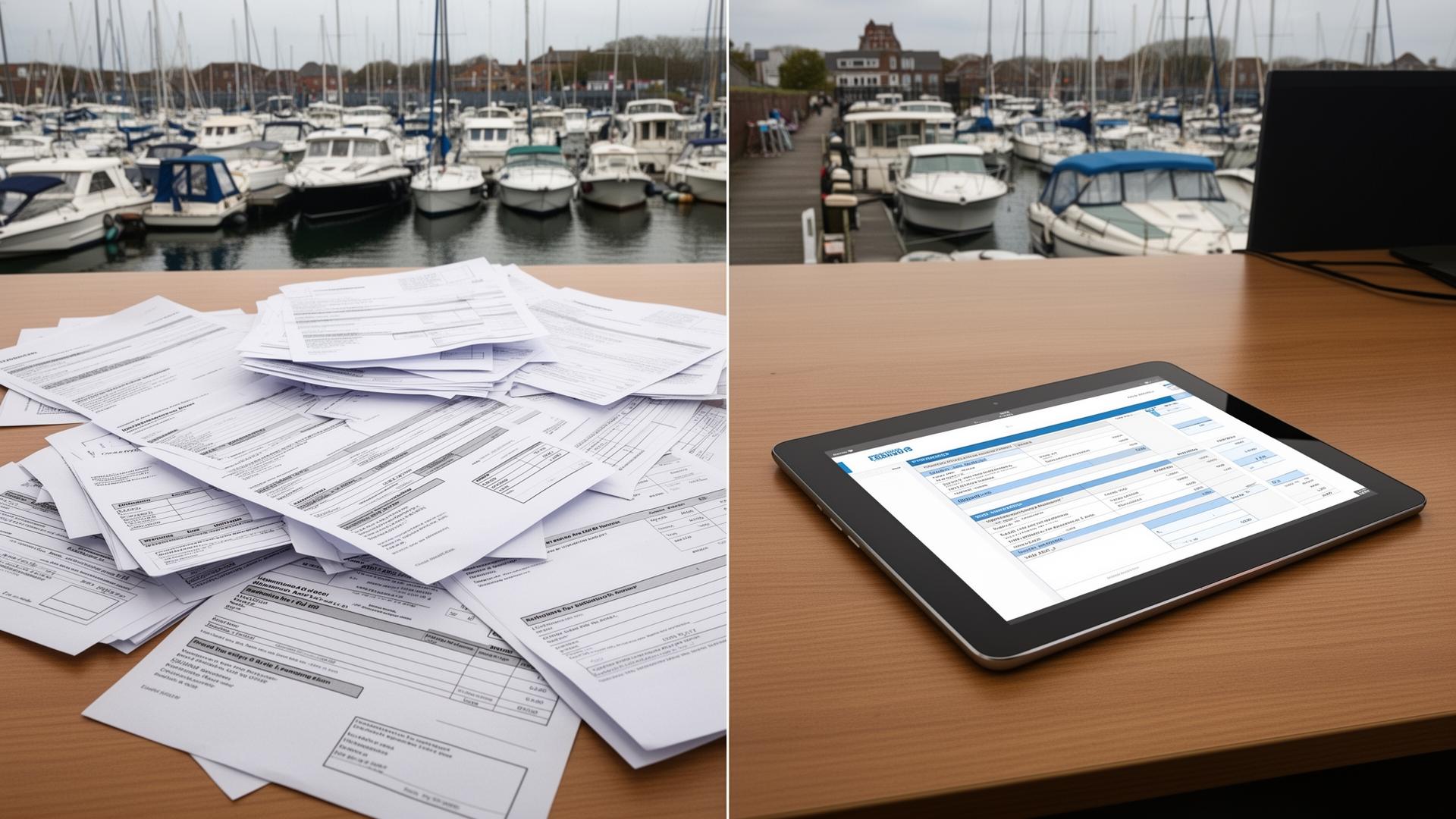
Rain-smudged job cards, quoting at the kitchen table, invoices raised days after the work finished. Where the hours and the money actually go in a paper yard.
6 min read By PayCamp Yards Team"We've always done it this way" is an expensive mindset. Paper work orders, whiteboard schedules, and spreadsheet invoices aren't free—they're costing you money every single day. Most boat yard operators underestimate the true cost by 50% or more.
Paper-based marina management creates costs that don't appear on any line item but drain profitability constantly. Here are the six major cost factors most boat yards don't fully account for:
Time each technician spends on paperwork instead of chargeable work. Time it for a fortnight — most yards are surprised.
Measure: minutes/day × rate × staff
Work performed that never reaches an invoice, through forgotten entries, unrecorded materials and lost job cards.
Measure: audit one month of jobs vs invoices
The gap between finishing a job and sending the invoice. Longer gaps mean weaker cash flow and more arguments about what was agreed.
Measure: average job-completion-to-invoice days
Misread handwriting, missing information and re-keying mistakes, all of which have to be chased and corrected.
Measure: corrections logged per week
Without photo evidence and a clear record of what was authorised, disputed invoices tend to be settled in the customer's favour.
Measure: value written off in disputes
Office time spent filing, searching, re-keying and chasing information that should have been captured once at the job.
Measure: admin hours/week × cost
The cost of paper is real but it is not a single number, and any article that gives you one without showing its working is guessing. What follows is a method for calculating yours, with one worked example clearly labelled as such.
The gap between finishing a job and sending the invoice is worth measuring, because it is one of the few costs here you can read straight off your own records. Where paper adds delay, it is usually because:
Digital systems generate invoices immediately when jobs are marked complete. All time, materials, and photos are already captured. The invoice can go to the customer within minutes of job completion.
Worked example — a boat yard with £500,000 in annual revenue, figures illustrative: invoicing two weeks faster improves cash flow by roughly £19,000 at any given time. At typical borrowing rates, that's worth £1,000-2,000 per year in reduced finance costs—before considering the reduced disputes from fresher billing.
Revenue leakage is the hardest cost to see, because the work was done and nobody noticed it was never charged for. We have no citable UK figure for how large it is; you can size your own by auditing a month of completed jobs against the invoices raised. It happens through several channels:
Worked example, illustrative only: if a yard billing £500,000 a year found on audit that between 5% and 15% of work never reached an invoice, that would be £25,000–£75,000 of revenue on work already done and already paid for. We are not claiming that range applies to your yard — audit and find out.
Office staff in paper-based boat yards spend hours on tasks that digital systems eliminate or drastically reduce:
Multiply the hours you have just measured by what that time costs you. Whatever the figure comes to, it is money that could fund customer service, business development or better technician wages instead.
To understand what paper is really costing your boat yard, work through this calculation:
Put the subscription against the figure you have just calculated rather than against a claimed industry multiple. A £99/month plan is £1,188 a year. Whether that is trivial or significant next to what paper is costing you is a question your own numbers answer — and if the honest answer is that it is not worth it for your yard, we would rather you knew that before you signed up.
Where the return comes from, in the order it usually arrives:
Once the change has paid for itself, the gains keep running. The honest question is not whether you can afford management software — it is whether you have ever measured what the current system costs you.
Founder & Lead Developer
Fourteen years living aboard, thirty years in IT, and five years supporting dealer management systems in the motor trade — back to configuring FoxPro-based dealer systems in 1998. Hamish has spent a long time on the customer side of a yard office, which is why PayCamp Yards is built for both sides of the counter.
Learn more about our team →Try PayCamp Yards free for 14 days and see the difference digital makes.