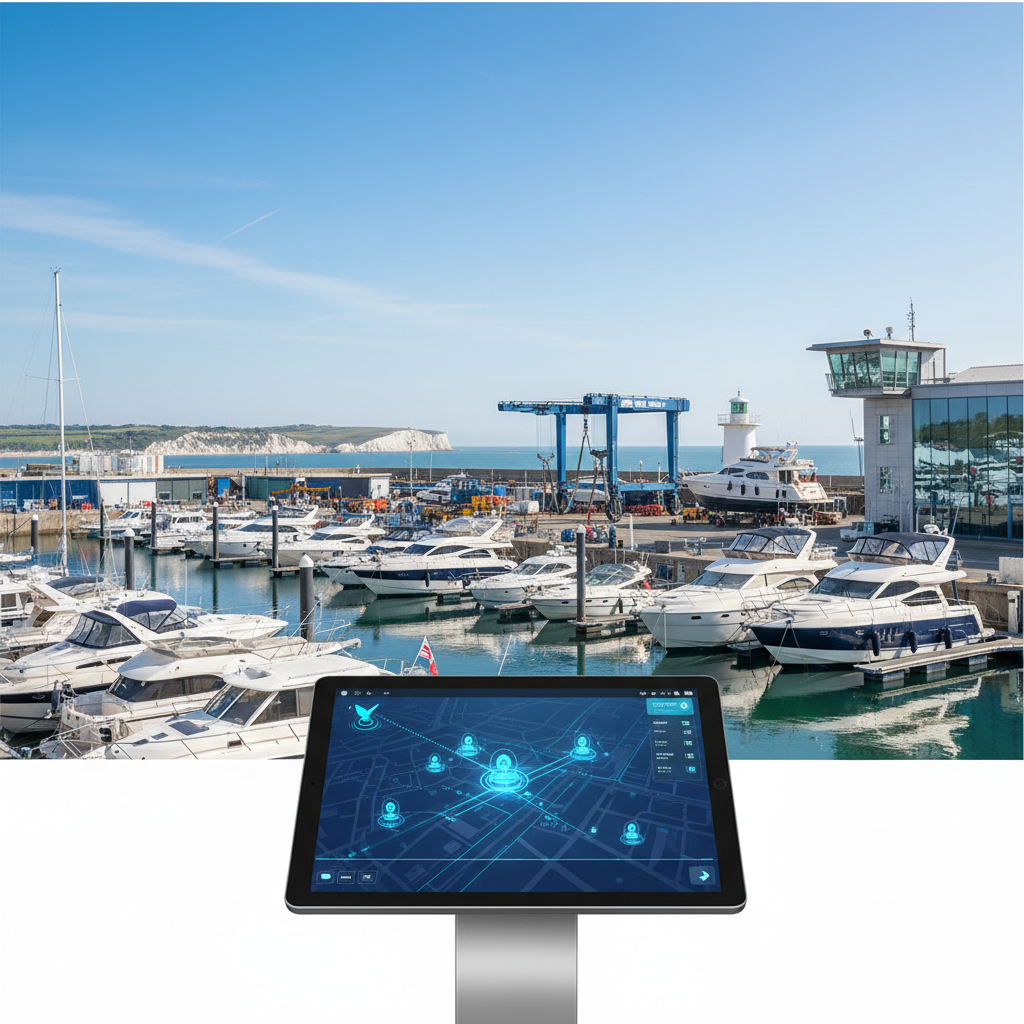
For UK marina and boat yard operators, managing the constant flux of vessels in and out of the premises is a significant logistical challenge. Whether it is a busy coastal facility in the Solent or a quiet inland waterway yard, maintaining real-time visibility over every hull is no longer a luxury—it is a core component of modern operational excellence.
A robust vessel tracking system serves as the digital eyes of your facility. By integrating tracking data with your daily management workflows, you can improve berth turnover, enhance security, and provide a superior level of service to your berth holders. This guide explores how these systems are reshaping the UK marine industry and why they are essential for future-proofing your business.
What is a Vessel Tracking System in a Marina Context?
In the broadest sense, a vessel tracking system allows operators to monitor the location, movement, and status of boats within their jurisdiction. While large-scale global tracking relies on AIS (Automatic Identification System) and satellite data, for a UK boat yard or marina, the focus is often on 'micro-tracking'. This involves a combination of shore-based AIS receivers, RFID tags, and increasingly, integration with Berth Management Software.
For an operator, the system provides a live dashboard of which vessels are currently at their assigned berths, which are at the fuel dock, and which have departed for the day. This data is invaluable for local port authorities and marina managers who need to ensure compliance with safety regulations and environmental standards. By moving away from manual 'walk-the-dock' checks, operators can allocate staff to higher-value tasks, significantly improving efficiency.
UK Insurance Benefits
Many UK marine insurers look favourably upon yards that use active vessel tracking. Implementing these systems could lead to lower premiums for your professional indemnity or hull and machinery cover.
Enhancing Operational Efficiency and Revenue
One of the most immediate benefits of a vessel tracking system is the optimisation of berth occupancy. Traditional methods often lead to lag times between a boat leaving a berth and the office being notified, resulting in lost revenue from short-stay visitors. With real-time tracking, your team is alerted the moment a berth becomes vacant, allowing for instant reallocation.
This level of precision is a core component of [Marina Management Best Practices: A Guide for UK Operators](/blog/marina-management-best-practices-uk). Furthermore, when tracking is used in conjunction with a sophisticated financial backend, it ensures that every movement is accounted for. For instance, when a vessel moves from a mooring to a work cradle, the system can trigger an update in your [boat yard billing system](/blog/choosing-the-right-boat-yard-billing-system), ensuring that yard storage rates are applied accurately and automatically without manual data entry.
Maximising Short-Stay Revenue
Use your tracking system to identify 'no-shows' early. If a vessel hasn't entered the geofence by 4 PM, you can release the berth for another visitor, double-dipping on the revenue for that evening.
Transform Your Boat Yard
Purpose-built for UK boat yards and marinas.
Improving Safety and Security in UK Waters
Security is a top priority for UK boat owners, particularly during the winter months or in remote locations. A vessel tracking system acts as a powerful deterrent against theft and unauthorised use. Geofencing capabilities allow operators to set virtual boundaries; if a vessel moves outside of its designated area without prior authorisation, the system can trigger an immediate alert to the yard manager.
From a safety perspective, tracking data is vital during adverse weather events, which are increasingly common in the UK. Knowing exactly which vessels are in the water and which are high-and-dry allows for rapid response during storm surges or flooding. It also assists in the event of an emergency on board, providing emergency services with an exact location within the marina complex rather than a general address.
Modern tools, simple to use
PayCamp Yards: purpose-built for UK boat yards.
Integrating Tracking with Modern Software Solutions
A vessel tracking system reaches its full potential when it is not a siloed tool but an integrated part of your management ecosystem. By [optimising operations with berth management software](/blog/optimising-marina-operations-berth-management-software), you can cross-reference physical vessel movements with contract data.
For example, if the tracking system detects an unidentified vessel entering a berth, the software can instantly check it against the day’s arrivals and flag it for the harbour master if no match is found. This automated oversight reduces the 'leakage' of mooring fees and ensures that only paying customers or authorised contractors are accessing your facilities. In the competitive UK market, this level of professional oversight is what differentiates premium marinas from basic boat yards.
Beyond daily operations, the long-term data collected by a vessel tracking system is a goldmine for strategic planning. By analysing traffic patterns, peak arrival times, and average stay durations, marina owners can make informed decisions about infrastructure investment.
Are your fuel docks consistently congested on Friday afternoons? Does a particular section of the pontoon network see less movement, making it ideal for long-term storage or refurbishment? Instead of relying on gut feeling, UK operators can use hard data to justify capital expenditure or to redesign the layout of the yard for better flow. This data-driven approach is essential for maintaining a competitive edge in an evolving marine landscape where customers expect seamless service.
Frequently Asked Questions
Written by
Hamish Lowry-Martin
Founder & Lead Developer
With 30 years in IT and 20 years developing business systems, Hamish spent the last decade working closely with marinas and boat yards—watching first-hand how they struggle with outdated tools. That hands-on observation led to PayCamp Yards.