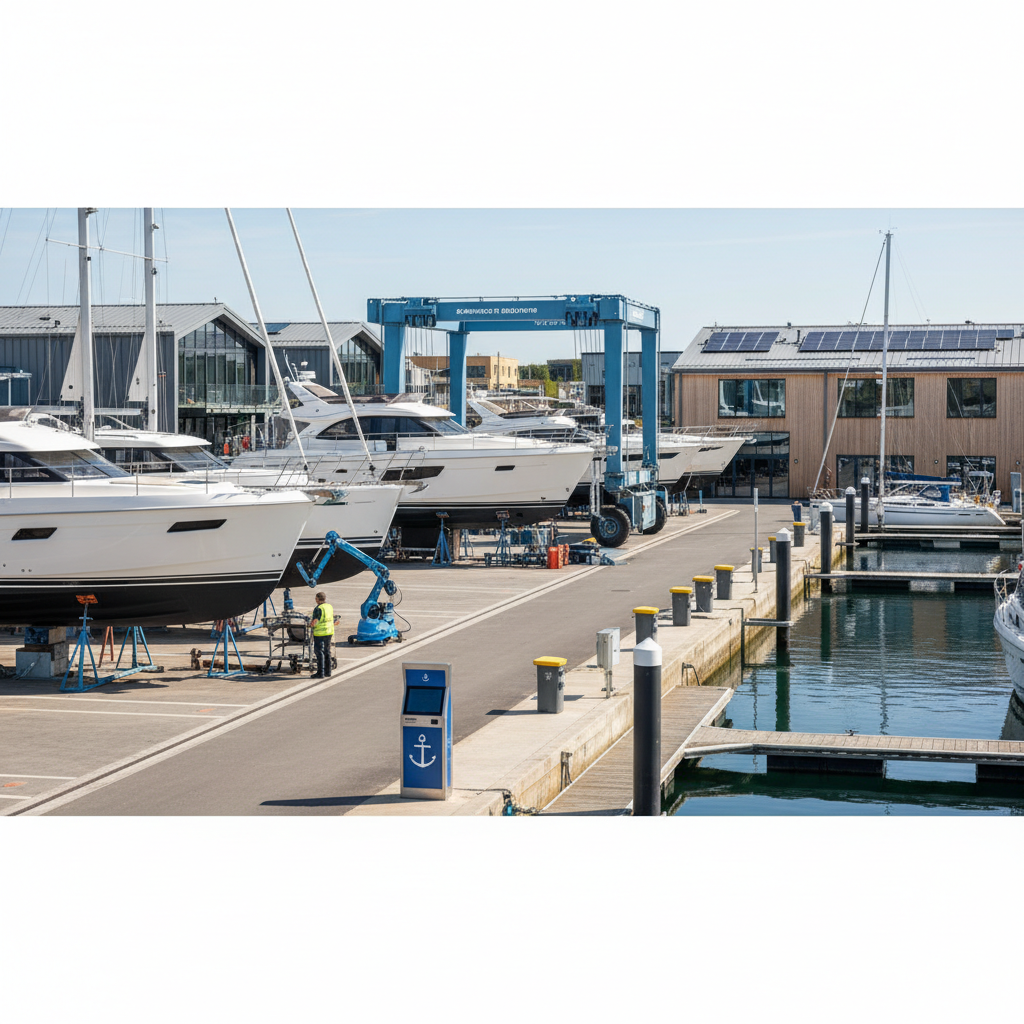
In the frantic climate of a busy UK boat yard, administrative tasks often feel like a secondary concern to the physical demands of lifting, storing, and maintaining vessels. However, for many British operators, the end-of-month invoicing cycle remains a manual marathon of spreadsheets, paper worksheets, and chasing overdue payments. As labour costs rise and customer expectations for digital convenience grow, manual billing is no longer just an inconvenience; it is a drain on profitability.
Boat yard billing automation is the process of digitising and streamlining the entire financial workflow—from the moment a work order is created to the second the VAT-compliant invoice hits the customer’s inbox. By embracing automation, UK marinas can ensure that every hour of labour and every litre of antifoul is accurately captured and billed without human error.
The High Cost of Manual Invoicing in UK Boat Yards
For many traditional yards across the South Coast and the Norfolk Broads, the billing process is fraught with 'leakage.' Leakage occurs when billable hours or materials are forgotten during the transition from the workshop floor to the office desk. When a technician is juggling multiple refits, recording time on a paper scrap often leads to lost revenue. Furthermore, the administrative burden of manually calculating VAT, Applying the correct RPI adjustments for long-term storage, and cross-referencing electricity sub-meter readings is immense.
Automating these processes removes the 'human bottleneck.' Instead of spending three days at the end of the month generating invoices, an automated system can compile data in real-time. This transition is a core component of [Marina Management Best Practices: A Guide for UK Operators](/blog/marina-management-best-practices-uk), where efficiency isn't just about moving boats, but about professionalising the back-office environment.
Prevent Revenue Leakage
Implement a 'Clock-in, Clock-out' digital system for your engineers. By linking their time directly to a work order, you can automate labour billing and ensure not a single billable minute is missed.
Capturing Secondary Revenue: Electricity, Storage, and Lifts
One of the most significant advantages of boat yard billing automation is the automated capture of variable costs. In the UK, electricity costs have become a major overhead. Manually reading meters and manually entering that data into an invoice is prone to error and incredibly slow. Modern billing systems can integrate directly with smart pedestals to pull usage data automatically.
Similarly, winter storage and lift-out schedules are complex. An automated system can trigger a bill the moment a crane operation is logged as 'complete' in the yard. This ensures that cash flow is consistent rather than seasonal. By [optimising operations with berth management software](/blog/optimising-marina-operations-berth-management-software), operators can link physical location data directly to the billing engine, ensuring that if a boat moves from a premium pontoon to a dry stack, the price change is reflected instantly without manual intervention.
Direct Debit Advantage
Switching your annual berthing clients to automated Direct Debit can improve your cash flow by up to 30% and significantly reduce the time spent on manual bank reconciliations.
Transform Your Boat Yard
Purpose-built for UK boat yards and marinas.
VAT Compliance and Making Tax Digital (MTD)
UK boat yard operators must navigate specific tax requirements, including varying VAT rates for commercial vs. leisure vessels and the complexities of MTD. Manual billing increases the risk of non-compliance. Automation ensures that your financial records are digitally linked, satisfying HMRC requirements while providing a clear audit trail.
When you are [choosing the best boat yard billing system for UK marinas](/blog/choosing-the-right-boat-yard-billing-system), it is vital to ensure the software supports UK-specific financial integrations like Xero or Sage. This connectivity allows for 'one-click' reconciliation, where payments received via credit card or Direct Debit are automatically matched against outstanding invoices, saving hours of bank statement soul-searching.
Modern tools, simple to use
PayCamp Yards: purpose-built for UK boat yards.
Improving the Customer Experience through Digital Payments
Modern boat owners—whether they keep a RIB in a dry stack or a 50ft yacht in a premier marina—expect a seamless digital experience. They want to receive a clean, PDF invoice via email and pay it immediately via a secure link. Automated billing systems allow for the setup of 'Auto-Pay' or Direct Debit for recurring fees like annual berthing.
This doesn't just benefit the customer; it drastically reduces your Debtor Days. Automated reminders can be scheduled to nudge late payers at 7, 14, and 30 days, removing the need for uncomfortable 'man-to-man' phone calls between the yard manager and a long-standing client. Professionalism in billing builds trust and reinforces the premium nature of your services.
Beyond just getting paid, boat yard billing automation provides data that manual systems simply cannot offer. By categorising revenue streams—such as labour, parts, storage, and fuel—operators can run instant reports to see which areas of the business are most profitable.
Is your workshop losing money due to underestimated labour hours? Is your chandlery stock-turn slower than expected? Automation provides the visibility needed to make informed decisions. You can track year-on-year growth and seasonal trends at the touch of a button, allowing for better resource allocation during the peak Spring 'fit-out' season.
Frequently Asked Questions
Written by
Hamish Lowry-Martin
Founder & Lead Developer
With 30 years in IT and 20 years developing business systems, Hamish spent the last decade working closely with marinas and boat yards—watching first-hand how they struggle with outdated tools. That hands-on observation led to PayCamp Yards.