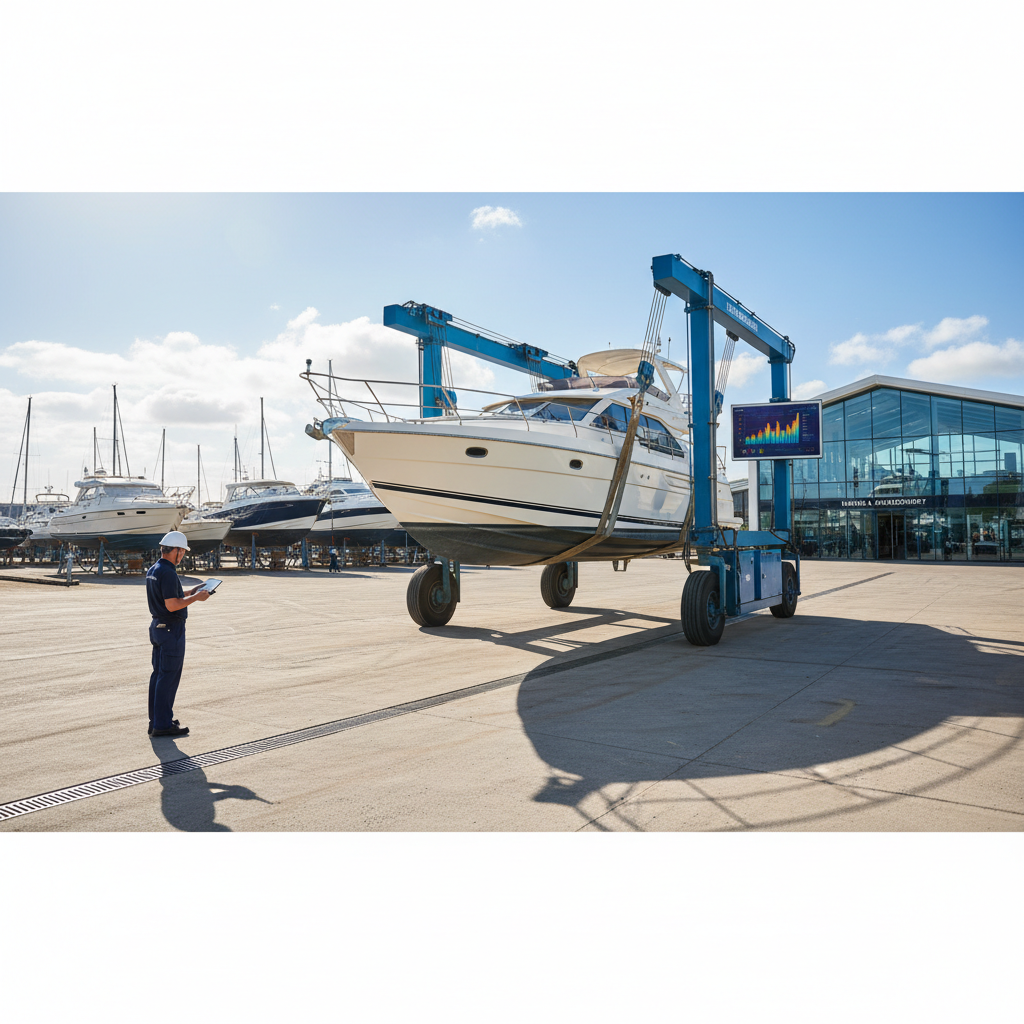
In the high-stakes environment of a UK boatyard, the lifting bay is the heart of the operation. Managing the movements of luxury yachts, commercial vessels, and leisure craft requires more than just a skilled crane operator; it requires surgical precision in scheduling, safety documentation, and resource allocation. Traditionally, haul-out seasons have been managed via whiteboards and spreadsheets, but as marinas grow more complex, these manual systems are increasingly prone to error.
Specialist boat lifting software has emerged as a critical tool for modern marina managers. By digitising the hoist schedule and integrating it with broader yard management systems, operators can reduce downtime, mitigate risk, and significantly improve the customer experience. This guide explores how professional software can transform your lifting operations from a logistical bottleneck into a streamlined revenue driver.
The Strategic Importance of Modern Lifting Management
For a UK marina, the 'lifting season'—typically the spring relaunch and autumn haul-out—represents the peak of operational stress. During these windows, the efficiency of your travel hoist or mobile crane dictates your yard's throughput. Boat lifting software provides a centralised 'source of truth,' allowing office staff and yard teams to see real-time availability. Unlike a physical diary, digital scheduling prevents double-bookings and allows for the instant adjustment of slots when weather conditions or mechanical issues arise.
Furthermore, integrating this technology into your daily routine is the first step toward [Optimising Operations with Berth Management Software](/blog/optimising-marina-operations-berth-management-software). When your lifting schedule communicates directly with your berthing plan, you ensure that every boat coming out of the water has a designated cradle or slot on the hardstanding ready and waiting, preventing yard congestion.
Operational Efficiency
Sync your lifting schedule with your pressure-washing bay occupancy. Often, the bottleneck isn't the crane itself, but the time it takes to clean the hull before moving the boat to its cradle.
Enhancing Safety and Compliance in the Yard
Health and Safety (H&S) is the primary concern for any lifting operation in the UK. Under LOLER (Lifting Operations and Lifting Equipment Regulations 1998), operators must ensure all lifting activities are planned, supervised, and carried out safely. Boat lifting software assists with compliance by allowing operators to attach risk assessments, weight calculations, and specific sling-point diagrams to every job.
By moving away from paper files, you ensure that the yard team has the most up-to-date information on their mobile devices. This is where [Mobile Job Cards for Marinas](/blog/mobile-job-cards-marina) become invaluable. Technicians can check the specific requirements of a hull—such as the location of sail drives or transducers—before the straps are even tightened. This level of digital oversight significantly reduces the risk of accidental damage and provides a robust audit trail for insurance purposes.
Risk Mitigation
Always use the 'Photo Upload' feature in your mobile job cards. Taking a photo of the hull and propellers before and after the lift provides an indisputable record of condition, protecting your yard from false damage claims.
Transform Your Boat Yard
Purpose-built for UK boat yards and marinas.
Maximising Resource and Technician Productivity
A lift is rarely an isolated event. It is usually the precursor to a pressure wash, an antifoul application, an engine service, or a hull repair. If the lifting schedule is siloed from the maintenance department, delays are inevitable. Effective boat lifting software bridges the gap between the hoist and the workshop.
By coordinating the lift with [Technician Scheduling for Boat Yards](/blog/technician-scheduling-boat-yard), you can ensure that the moment a boat hits the cradle, the necessary specialists are assigned to begin work. This joined-up approach minimises 'dead time' where vessels sit idle in the yard, freeing up space more quickly and allowing for a higher volume of billable work. In the UK's competitive marine sector, the ability to turn boats around faster directly impacts the bottom line.
Modern tools, simple to use
PayCamp Yards: purpose-built for UK boat yards.
Financial Accuracy and Automated Invoicing
One of the most persistent leaks in boatyard revenue is the 'forgotten' charge. Whether it is an extra day on the pressure-wash bay, the hire of a specific spreader bar, or environmental levies for wash-down water treatment, manual billing often misses the finer details. Boat lifting software automates this process by linking the physical action to the customer's account.
As soon as a lift is marked as complete on a mobile device, the software can trigger an automated invoice based on the vessel’s LOA (Length Overall) or tonnage. This ensures that every movement is accounted for and billed accurately. For UK boatyards VAT compliance and transparent pricing are essential for maintaining customer trust, and digital systems provide the clear, itemised records that modern boat owners expect.
Beyond the day-to-day logistics, boat lifting software provides UK marina owners with invaluable long-term data. By analysing peak lifting times, equipment utilisation rates, and average job durations, you can make informed decisions about future investments. Should you invest in a larger travel hoist? Do you need to hire an additional operative for the autumn rush?
This data also helps in managing the yard's physical footprint. By understanding your average 'stay time' on the hardstanding, you can optimise the density of your storage layout. In many British coastal marinas where space is at a premium, being able to squeeze an extra 5% of capacity into your yard through better data management can result in thousands of pounds of additional annual revenue.
Frequently Asked Questions
Written by
Hamish Lowry-Martin
Founder & Lead Developer
With 30 years in IT and 20 years developing business systems, Hamish spent the last decade working closely with marinas and boat yards—watching first-hand how they struggle with outdated tools. That hands-on observation led to PayCamp Yards.